
Transcriptome comparison of altitudinally adapted Arabidopsis lyrata populations
Background
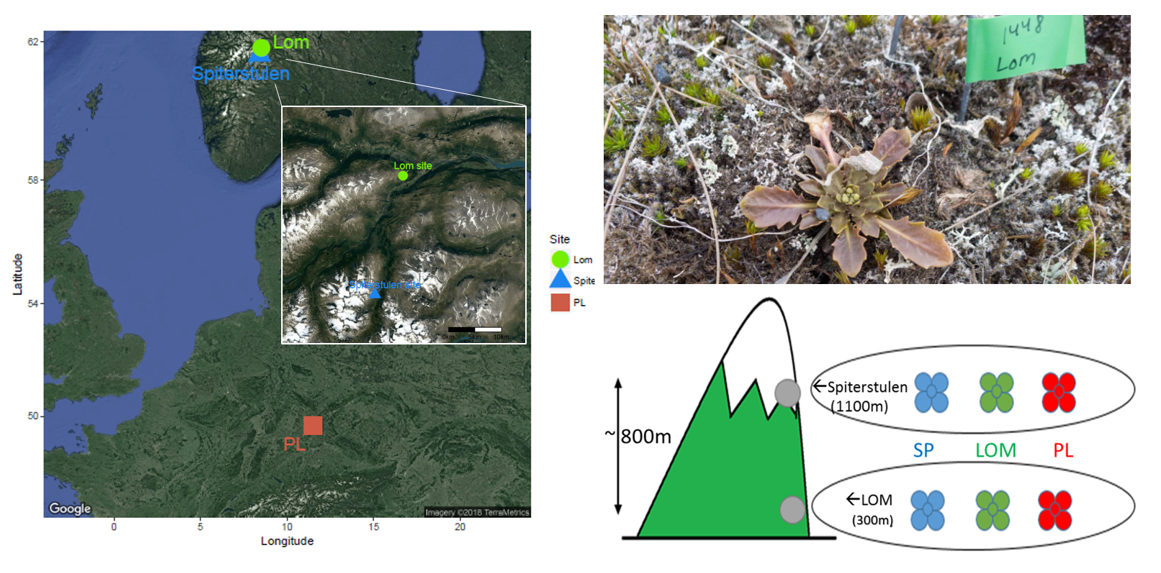
Local adaptation arises when populations experience different environmental conditions that drive divergent selection, resulting in measurable differences in phenotype, genotype, and gene expression. Transcriptomic variation provides a powerful link between genetic variation and adaptive phenotypes, as gene expression integrates genomic differences with environmental influences. Reciprocal transplant experiments are particularly useful for disentangling the effects of population origin and environmental conditions on gene expression patterns. In Arabidopsis lyrata, populations from contrasting environments offer a well-established system to study how gene expression contributes to adaptation across environmental gradients.
Aims
- Assess whether patterns of gene expression divergence reflect known genetic relationships among populations
- Quantify how gene expression variation is partitioned among populations and transplant sites
- Identify differentially expressed genes (DEGs) across populations and environments
- Determine biological functions enriched among DEGs and their potential roles in adaptation
- Evaluate whether environmental factors (e.g., temperature, light, soil conditions, and altitude) drive expression differences associated with adaptive traits such as flowering time and growth rate
Output