
Origins and Diversification of New Zealand Polyploid Genus Azorella
Background
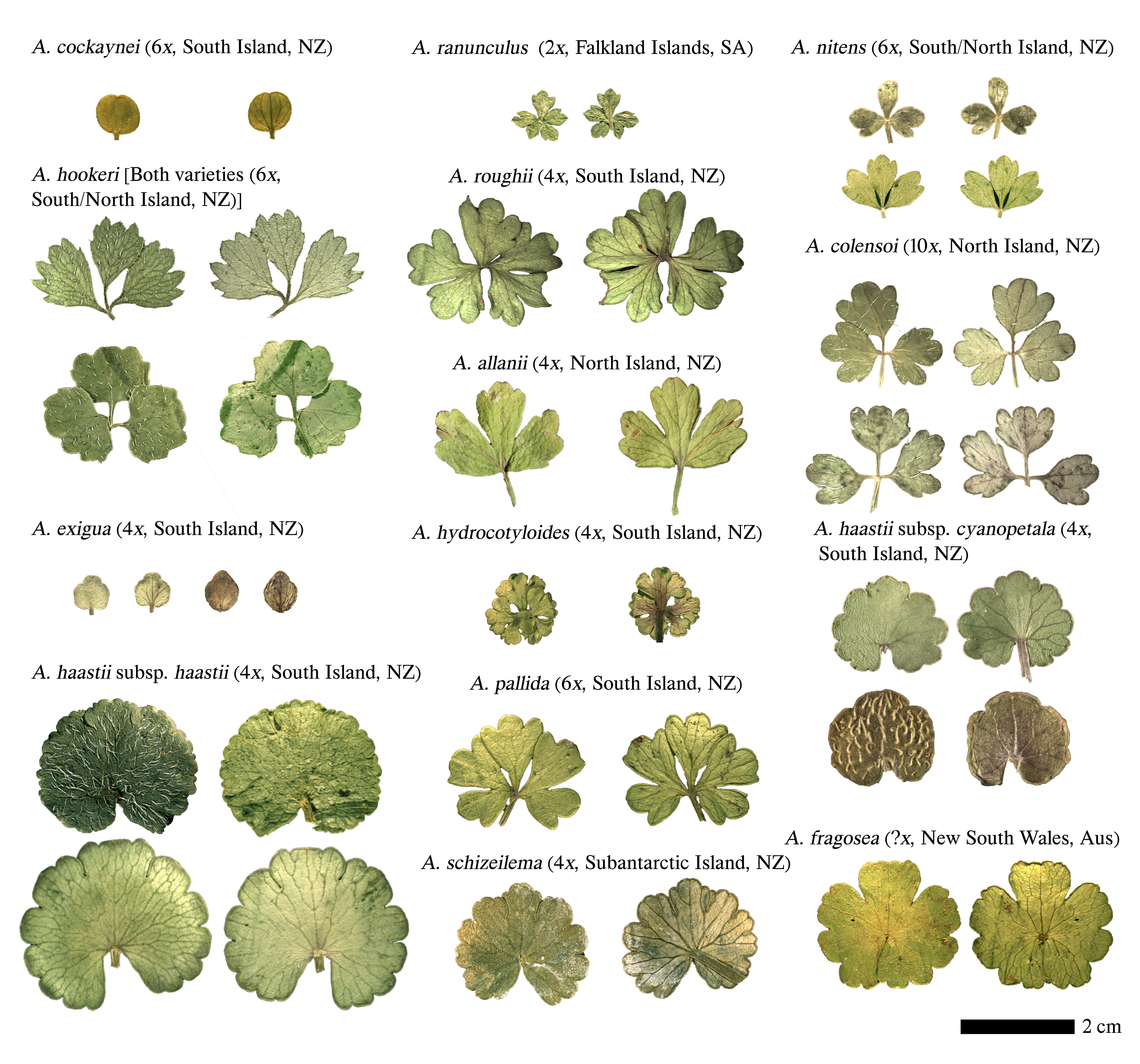
Polyploidy—whole genome duplication—is a major evolutionary force in plants that generates novel genetic diversity and promotes adaptation, speciation, and long-term evolutionary innovation. Following polyploidization, duplicated genomic content provides additional opportunities for diversification, and polyploid-rich genera (lineages containing closely related species at different ploidy levels) serve as powerful systems for studying post-polyploidization macroevolutionary processes. In New Zealand, Azorella section Schizeilema represents an exceptional system for investigating these dynamics. It comprises 14 described polyploid taxa (species, subspecies, and varieties) exhibiting three ploidy levels (4x, 6x, and 10x), alongside diverse leaf morphologies and distinct distributional ranges. These features suggest a complex evolutionary history involving polyploidization, hybridization, and ecological diversification.
Previous work indicates that New Zealand Azorella likely originated from multiple colonization events from South America, followed by diversification shaped by genome duplication and reticulate evolution. However, the relationships among taxa, the origins of higher ploidy levels, and how genomic and ecological traits have evolved following polyploidization remain incompletely resolved.
To address these gaps, phylogenomic approaches combining long-read Hyb-Seq data and comparative trait analyses provide a framework to link genome evolution, morphology, and ecological divergence in a unified evolutionary context.
Aims
This project aims to:
- Infer the evolutionary origins and diversification pathways of polyploid lineages (4x, 6x, and 10x), including evidence for hybridization and reticulate evolution, using the Angiosperms353 bait set
- Can Hyb-Seq method combine with long-read sequencing (e.g., PacBio) to enhance the resolution and recovery of homeologous copies in polyploid taxa
- Investigate the evolution of polyploid-associated traits, including monoploid (1Cx) and holoploid (2C) genome size, stomatal guard cell length, and homeolog copy number variation
- Examine ecological divergence among taxa using environmental niche modelling (ENM) and ENMtools, testing for niche conservatism, niche shift, niche novelty, and niche contraction